Why now
AI adoption is becoming a consumption problem.
The first wave of enterprise AI was measured by experimentation: pilots, copilots, assistants, summaries, and promising proof points. The next challenge is different. Demand is now coming from every function, workflow, platform, and team.
Without a common consumption discipline, each group starts making its own decisions about which model to use, how much cost is acceptable, what data is safe, whether retrieval is required, when reasoning models are justified, and where agents can act.
The enterprise risk is no longer only uncontrolled AI use. It is unmanaged AI consumption at scale.
What changed
The control point has shifted from tool approval to work routing.
Most organizations are still treating AI as a tool category. But the operating question is more precise: what kind of intelligence should this work consume?
From model selection to work classification
Simple automation, standard LLM use, RAG, reasoning models, agents, and human-only decisions require different routing logic.
From AI access to consumption boundaries
Data sensitivity, action authority, and consequence of error should shape which AI pattern is allowed.
From experimentation cost to unit economics
AI cost needs to be tied to business capability, workflow volume, model choice, and outcome value.
From governance review to telemetry
Leaders need visibility into where AI is being consumed, which routes are growing, and where risk or spend is concentrating.
Decision points
AI demand should be routed before it becomes architecture, cost, or control debt.
The practical decision is not whether a team can use AI. The practical decision is which intelligence pattern fits the work, and what controls must travel with that pattern.
1
How ambiguous is the work?
Low-ambiguity work may fit automation or standard LLM support. High-ambiguity work may require retrieval, reasoning, or human judgment.
2
What is the consequence of error?
The higher the consequence, the stronger the need for human review, evidence, auditability, and route restrictions.
3
What data and systems are involved?
Public content, internal knowledge, confidential data, restricted data, and system actions should not share the same pattern.
4
Can AI influence or trigger action?
Advisory output, workflow recommendation, and action execution are materially different operating risks.
5
Is the cost justified by the work?
Reasoning models and agentic workflows should be reserved for work where complexity, value, or risk justifies the spend.
Operating model
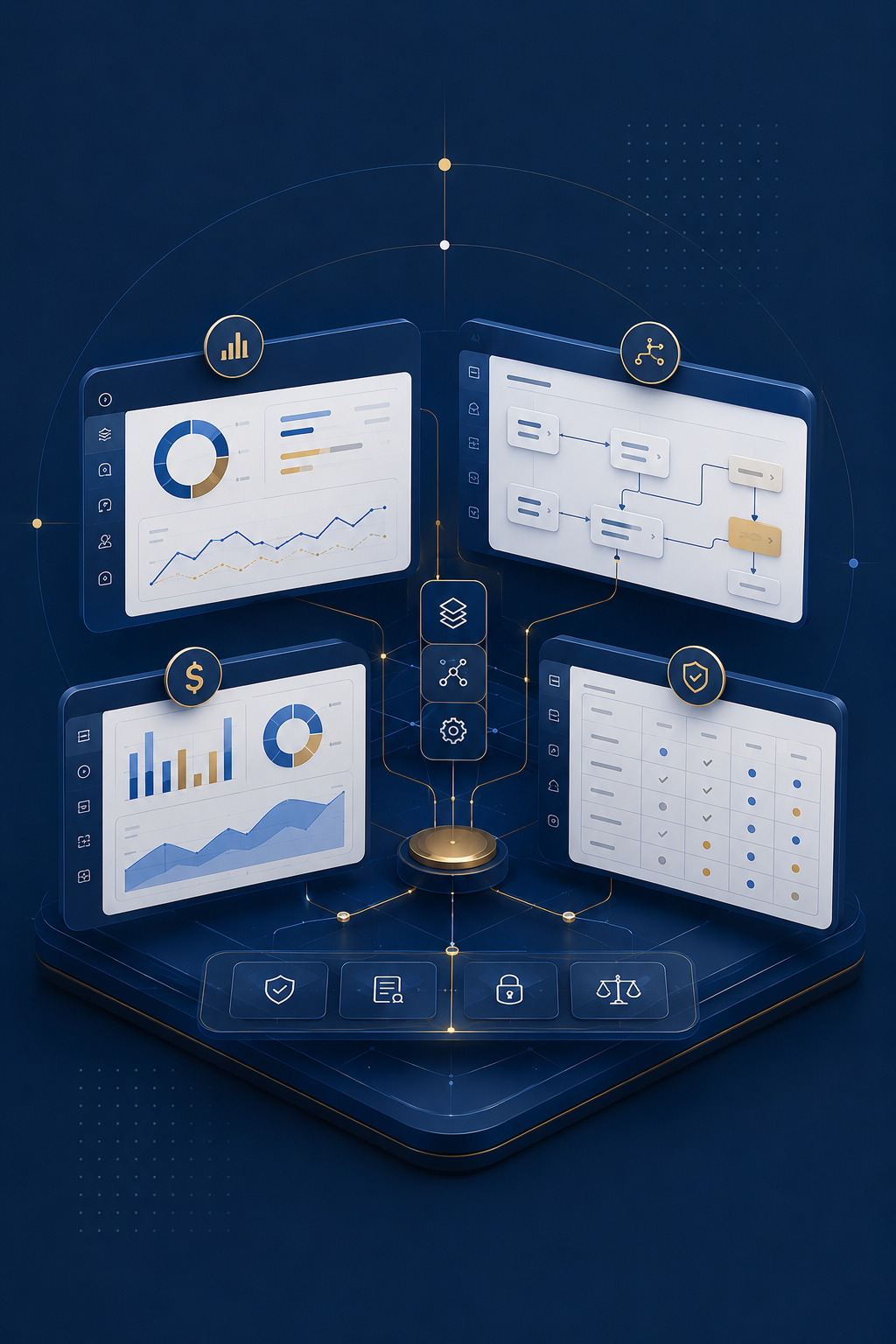
Consumption discipline needs four operating mechanisms.
The answer is not a larger policy document. It is a lightweight operating model that converts demand into route, control, cost, and accountability decisions.
1. Intake
Capture demand with enough context to understand workflow, data, consequence, cost tolerance, and operating owner.
2. Routing
Classify the work into the right intelligence pattern: no AI, automation, standard LLM, RAG, reasoning, agentic workflow, or human-only.
3. Controls
Attach controls based on route and risk tier: access, evidence, approval gates, review cadence, and prohibited actions.
4. Telemetry
Track spend, usage, model distribution, risk tier, outcome value, and control exceptions across the portfolio.
Questions to ask
The executive review should test fit, not enthusiasm.
?
Where is the organization overusing expensive AI for simple work?
?
Where is AI under-controlled because the use case looks like productivity but influences real decisions?
?
Which workflows should require retrieval, evidence, or human approval before business action?
?
Which AI patterns should be blocked or treated as human-only because the consequence of error is too high?
?
Can leaders see consumption by capability, model type, risk tier, cost, and outcome?
Suggested path
Access the book, then use the tools to create a working output.