The wrong debate
Most AI governance programs are still asking whether AI can act. The better question is whether AI already shaped the decision.
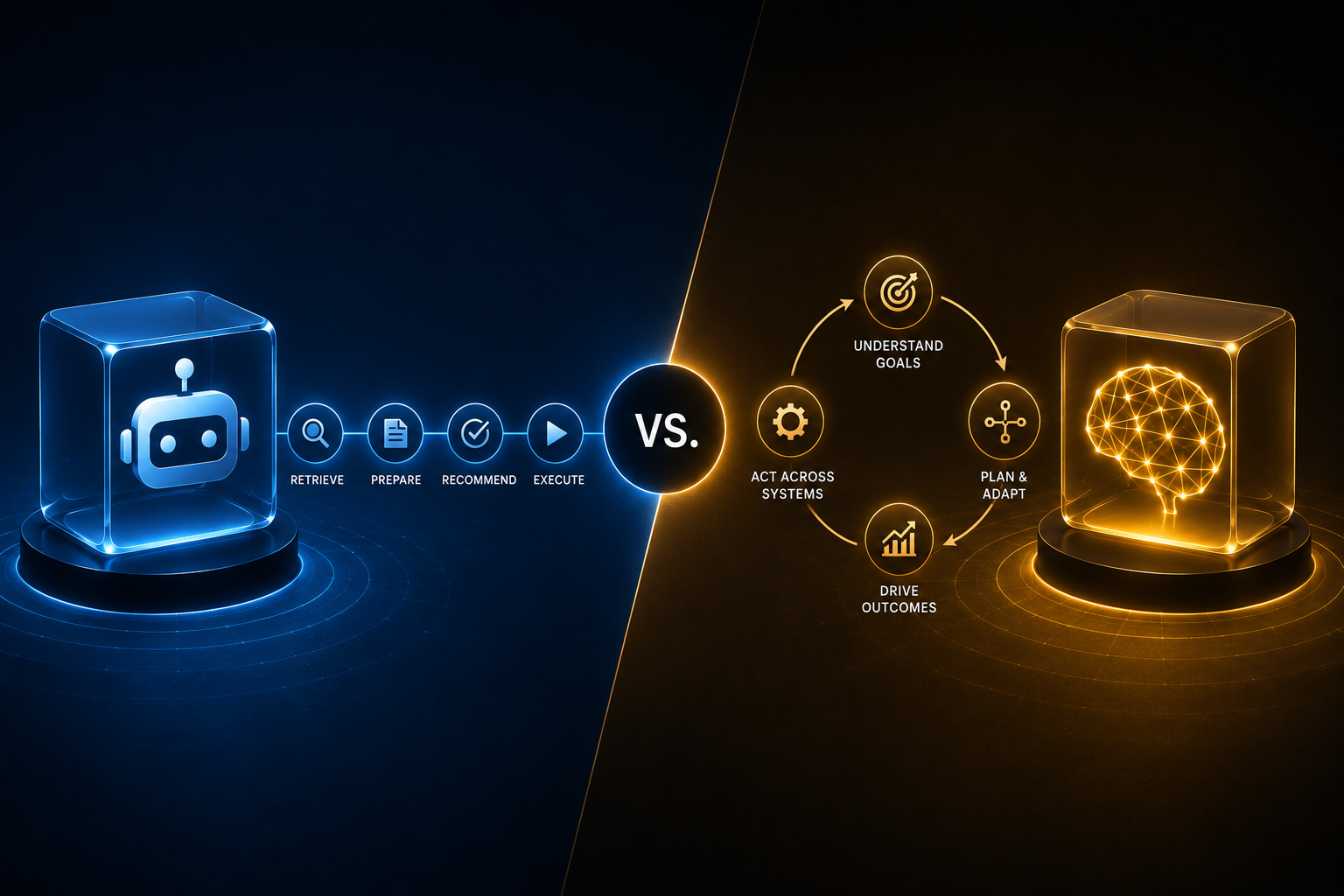
Enterprise teams often frame the agent conversation around autonomy. Can the system execute? Can it call tools? Can it replace a human step? Those questions matter, but they arrive too late in the governance sequence.
An AI system can materially influence a business outcome without performing the final action. It can retrieve evidence, summarize policy, rank options, draft a recommendation, prepare a case, prioritize an exception, or nudge a human toward a particular answer.
Most governance programs measure AI access. Few measure AI influence.
Influence before execution
Influence authority starts before system authority.
The formal control may still sit at approval, posting, fulfillment, or case closure. But the practical decision may have moved upstream into the AI-supported recommendation. When that happens, the approval step can become less of a control and more of a confirmation of a path already shaped by the system.
Recommendation shapes judgment
When AI suggests the supplier, refund, risk rating, or escalation path, the human reviewer starts from a framed answer.
Drafting shapes the outcome
When AI prepares the response, case note, exception rationale, or approval package, it influences what the enterprise records as reasoning.
Routing shapes priority
When AI classifies, queues, or escalates work, it changes which issues receive attention and which remain invisible.
Evidence shapes accountability
When AI selects the context used for review, it affects what the human sees, what audit can reconstruct, and what leaders believe happened.
Human oversight
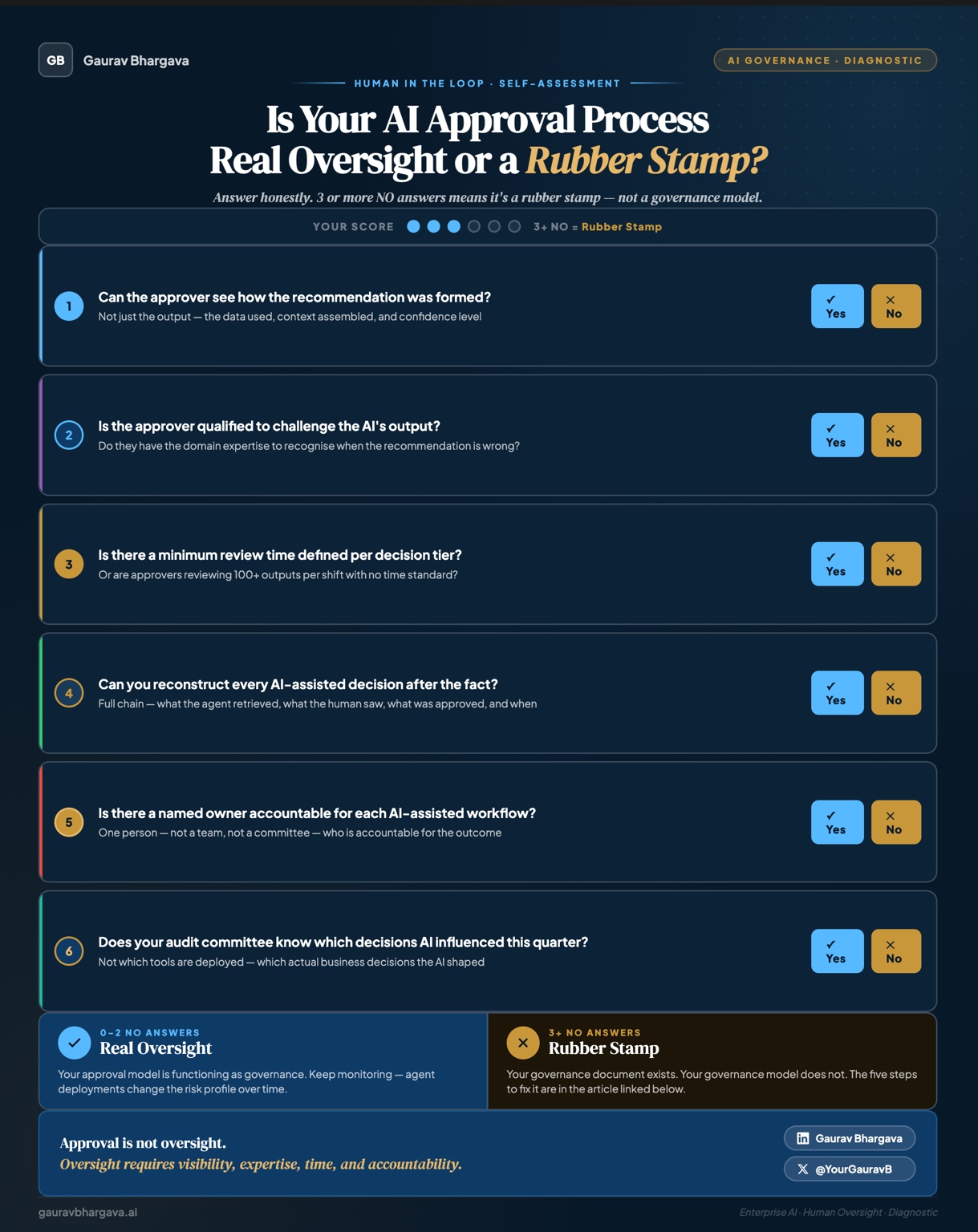
Human-in-the-loop is not automatically a control.
Human review becomes governance only when the reviewer has enough context, expertise, authority, time, and accountability to change the outcome. Otherwise, the human becomes a checkpoint in appearance and a rubber stamp in practice.
1
No context.
The reviewer sees an answer but not the evidence, assumptions, uncertainty, or retrieval path that shaped it.
2
No expertise.
The reviewer is asked to approve a recommendation they are not equipped to challenge.
3
No authority.
The reviewer can acknowledge the output but cannot redirect the workflow, override the recommendation, or demand escalation.
4
No accountability.
The workflow shows a human approval, but no one clearly owns the outcome created by AI participation.
Human presence is not governance. Human accountability is.
Authority ladder
Governance needs to classify what AI is allowed to influence, not only what AI is allowed to execute.
Most organizations put heavier controls around system updates and committed transactions. That is necessary, but incomplete. Influence often begins earlier, when AI recommends, drafts, or prepares work for a human to approve.
Answer
Explain information or retrieve knowledge.
Recommend
Suggest a path, option, exception, or decision.
Draft
Prepare response, rationale, case note, or approval package.
Trigger
Start routing, escalation, workflow, or downstream review.
Update
Modify data, records, cases, or workflow state.
Commit
Execute business action or post a final transaction.
Controls cannot begin at Commit if the decision was shaped at Recommend.
Operating model
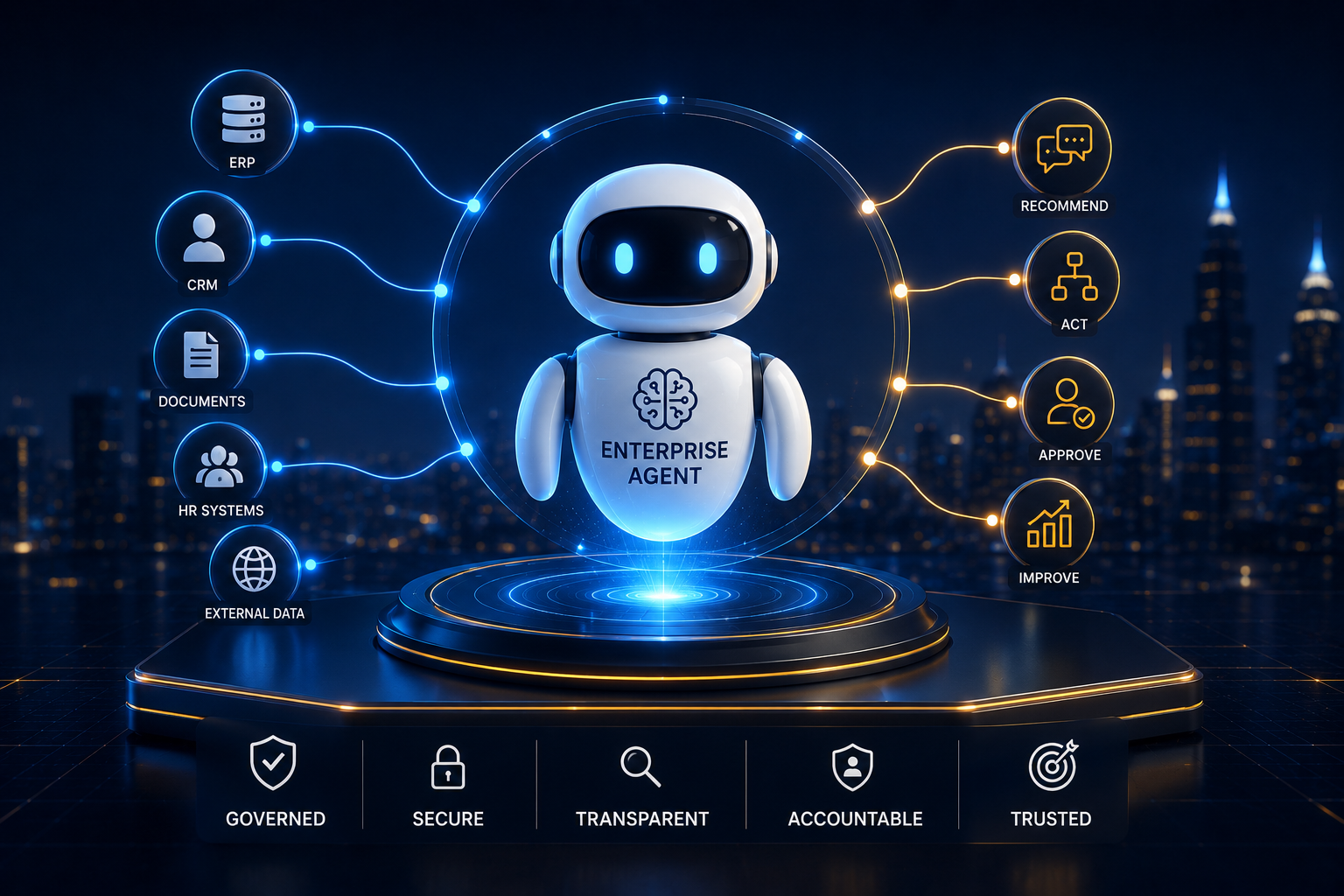
Every AI-influenced workflow needs four governance layers.
The point is not to slow every workflow. The point is to know where AI participates, what authority it has, how the work moves, and what evidence remains after the decision.
C
Context layer
Defines what systems, records, policies, documents, and memory AI can use when forming output.
A
Authority layer
Defines what AI may suggest, draft, trigger, update, or commit, and where escalation is required.
W
Workflow layer
Defines how work moves through reviews, approvals, routing, exception paths, and human intervention.
E
Evidence layer
Defines what must be retained to reconstruct the decision and explain the outcome later.
Evidence
Evidence is becoming the new control surface.
Traditional systems record the transaction, approver, and timestamp. AI-influenced workflows need more than that. The enterprise must be able to reconstruct what AI knew, what it recommended, who reviewed it, and why the final outcome occurred.
Traditional audit trail
Useful, but increasingly incomplete when AI shapes the path before final approval.
Transaction posted
Approver identified
Timestamp captured
Workflow completed
AI decision reconstruction
Required when recommendations, context, and workflow state influence business outcomes.
Context retrieved
Recommendation generated
Tools or systems invoked
Human review and override path
Final rationale preserved
Future auditability is decision reconstruction.
Questions to ask
The executive review should test decision influence, not only tool access.
?
Where does AI influence decisions today, even without performing the final action?
?
Which recommendations, drafts, summaries, classifications, and routing decisions require authority boundaries?
?
Can humans genuinely challenge the AI output, or are they approving a path already shaped for them?
?
Can the enterprise reconstruct the context, recommendation, review, and outcome after the fact?
?
Who owns outcomes created through AI participation: process owner, data owner, system owner, or business owner?
Closing position
Accountability starts before execution.
The biggest governance risk is not only autonomous execution. It is invisible influence. Most enterprise AI systems begin shaping decisions long before they perform actions. The organizations that scale successfully will prove what AI knew, what AI recommended, who approved it, and why the outcome occurred.
Suggested path
Use the briefing with related articles, cards, and resources.
This path keeps the briefing practical: read the argument, use the cards in discussion, then move into resources when the topic becomes an operating model conversation.